Architecture vs product
Sui vs Hyperliquid
A builder-focused comparison of Sui's object-native Move platform and Hyperliquid's trading-native financial infrastructure.
Sui and Hyperliquid are the cleanest architecture-first versus product-first comparison
Sui starts from a technical thesis: assets should be modeled as typed objects, Move should make ownership and scarcity safer, and a high-throughput object platform should make certain applications easier to build. Hyperliquid starts from a market thesis: onchain trading can compete when the orderbook, perps, vaults, and execution feel good enough that traders actually use the product.
That makes the comparison unusually useful for agencies and infrastructure firms. Sui asks whether a better programming and asset model can produce enough application demand. Hyperliquid asks whether a successful trading venue can decentralize, open its platform, and broaden without losing the product quality that made it matter.
The right choice depends on whether the application is asset-model-heavy or market-structure-heavy.
Market snapshot (May 28, 2026)
Market values are inserted from the shared snapshot and can be refreshed at build time.
| Metric | Sui | Hyperliquid | Read |
|---|---|---|---|
| Market cap | $3.77B | $13.3B | Hyperliquid has much stronger market value today despite a narrower technical surface. |
| Market-cap rank | #31 | #11 | Sui is still a specialist ecosystem; Hyperliquid has punched above its ecosystem breadth. |
| 3-month market-cap change | +9.06% | +105.10% | The market has rewarded Hyperliquid's product story more aggressively. |
| 30-day token price change | +2.18% | +51.37% | Short-term movement is a risk signal, not a technical verdict. |
| DeFiLlama chain TVL | $538.5M | $1.56B | Sui is building a broader app and asset ecosystem; Hyperliquid capital is more trading-native. |
Sui's strongest argument is model quality
Sui's object-centric design is a real technical distinction. Objects can represent owned assets, shared state, immutable data, or object-owned structures. For games, credentials, commerce, digital goods, payments, and programmable workflows, that can be a more natural model than forcing every product through account-balance conventions.
Sui Move adds a safety-oriented smart-contract language lineage, and programmable transaction blocks give builders a way to compose multiple calls and typed objects inside one transaction. That matters for applications where the product is not just a token or pool, but a set of owned objects moving through workflows.
The weakness is not architecture quality. The weakness is ecosystem gravity. Fewer trained Move engineers, less liquidity, smaller community distribution, and fewer default integrations all make Sui harder to recommend when time-to-market and immediate user access dominate.
Hyperliquid's strongest argument is market use
Hyperliquid's strongest claim is empirical: traders use the venue. The orderbook, perps UX, HLP, builder codes, funding/liquidation mechanics, and fee narratives created traction before the chain had to pretend to be everything to everyone.
HyperEVM and HIP-3 turn that venue into a broader builder surface. HyperEVM lets EVM-compatible contracts sit near HyperCore. HIP-3 lets builders deploy perpetual markets, with serious requirements around specifications, oracles, uptime, settlement, and slashing risk.
The weakness is that public auditability and decentralization trail market traction. Hyperliquid's public node repo is useful for operation and data outputs, but it is not a full public core implementation. Its validator set is much smaller than mature general L1s. For some trading products, that trade may be worth it. It should still be named clearly.
Builder-fit comparison
A strong agency should be able to explain why the project belongs on one network rather than just naming both.
| Project type | Better default | Why |
|---|---|---|
| Asset-heavy game, inventory, credential, commerce, or object workflow | Sui | The object model and Move semantics can make product state cleaner and safer. |
| Perps, trading dashboards, vault analytics, liquidations, funding, market-making | Hyperliquid | The native market structure is the product surface, not an external integration. |
| Broad non-financial consumer app | Sui | Sui is the broader general app platform, even though its ecosystem is smaller. |
| Financial product that benefits from live orderbook/perp state | Hyperliquid | HyperCore adjacency is the reason to be there. |
| Team needs public code review of the core protocol | Sui | Sui has a much stronger public core-code surface through the MystenLabs/sui repository. |
| Team needs proven product-market fit right now | Hyperliquid | Hyperliquid's live trading venue is stronger evidence of current demand. |
Technical due diligence table
These are the questions that separate serious infrastructure review from chain-name shopping.
| Diligence area | Sui | Hyperliquid | Question to ask |
|---|---|---|---|
| Core model | Object-native Move, typed assets, programmable transaction blocks | HyperCore orderbook/perps plus HyperEVM contracts | Is the app's hard problem asset modeling or market execution? |
| Validator economics | Delegated proof-of-stake, epoch rewards, staking pools, storage-fund dynamics | Delegated HYPE staking, HyperBFT rounds, static epochs, jailing, reward formula | Does the team understand the network's actual security machinery? |
| Public code surface | Large public Rust/Move monorepo with framework, node, bridge, SDK, and docs | SDKs, APIs, node operation docs, signed binary workflow, limited public core source | Can the buyer inspect the parts it is depending on? |
| Market maturity | Technically coherent but still earning default status | Strong trading PMF but narrower and more risk-concentrated | Is the buyer optimizing for model quality or present user demand? |
Public-code review is where Sui looks stronger
The MystenLabs/sui repository is a real public engineering surface: Rust, Move, consensus, execution, SDKs, examples, docs, bridge code, release process, and security policy all sit in view. A reviewer can inspect the actual platform direction rather than only SDK wrappers.
Hyperliquid's public repos are useful for builders, especially SDKs and node/data-output documentation. But the core venue software is not exposed in the same way. Signed binaries and operational docs are better than nothing, but they are not equivalent to open-source protocol client diversity.
For conservative buyers, Sui is easier to diligence technically. For trading-native buyers, Hyperliquid may still win because the working venue matters more than the elegance of the public code surface.
The market-positioning read
Sui is trying to make a better general-purpose object platform. Hyperliquid is trying to make the best onchain financial venue. One is broader in design; the other is sharper in present use.
That means Sui's strongest agency pitch is architecture fluency: Move, objects, wallet/indexing, data stack, validator economics, and asset workflows. Hyperliquid's strongest agency pitch is trading fluency: orderbooks, funding, liquidation, APIs, vaults, builder fees, HIP-3, and risk controls.
A buyer should not ask which chain is better in the abstract. Ask whether the app's core state behaves like objects or like markets.
Sui vs Hyperliquid FAQ
The comparison is really about what kind of product the team is building.
Is Sui a better general-purpose chain than Hyperliquid?
Yes for most non-trading applications. Sui is designed as a broader smart-contract platform with an object-native model. Hyperliquid is more specialized around trading and financial market structure.
Is Hyperliquid better than Sui for DeFi?
For perps, orderbook trading, vaults, and market-structure products, Hyperliquid has the stronger product fit. For asset-heavy or general smart-contract apps, Sui may be the cleaner architecture.
Which has stronger public code transparency?
Sui. The main Sui implementation and Move framework have a much broader public repository surface. Hyperliquid has useful SDK and node operation materials, but the core node and venue logic is not exposed in the same way.
What should buyers ask before hiring for either chain?
For Sui, ask about Move, objects, PTBs, storage, indexing, and wallet flows. For Hyperliquid, ask about orderbook data, perps, margining, oracles, liquidations, HyperEVM, HIP-3, and risk operations.
Sources behind this comparison
The page uses dated market values and primary technical documentation for the protocol-specific claims.
Used for market cap, market rank, 30-day token change, and 90-day market-cap change calculations.
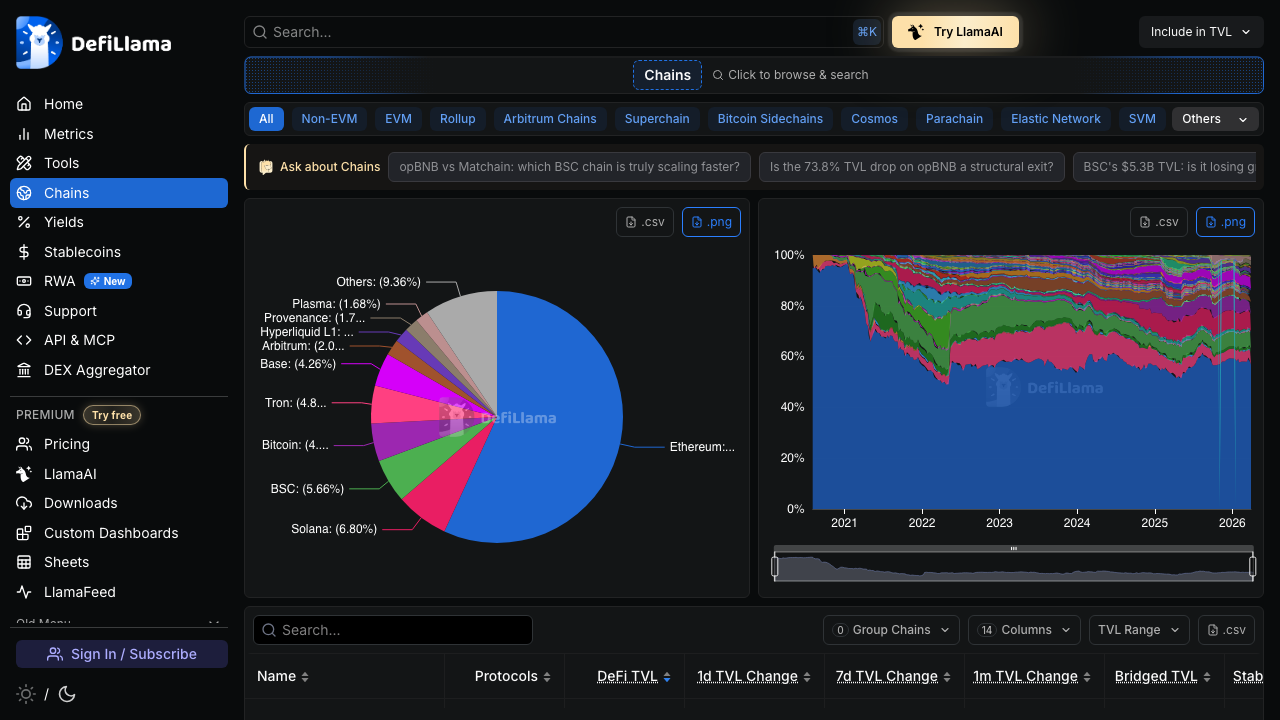
Used for chain-level TVL context.
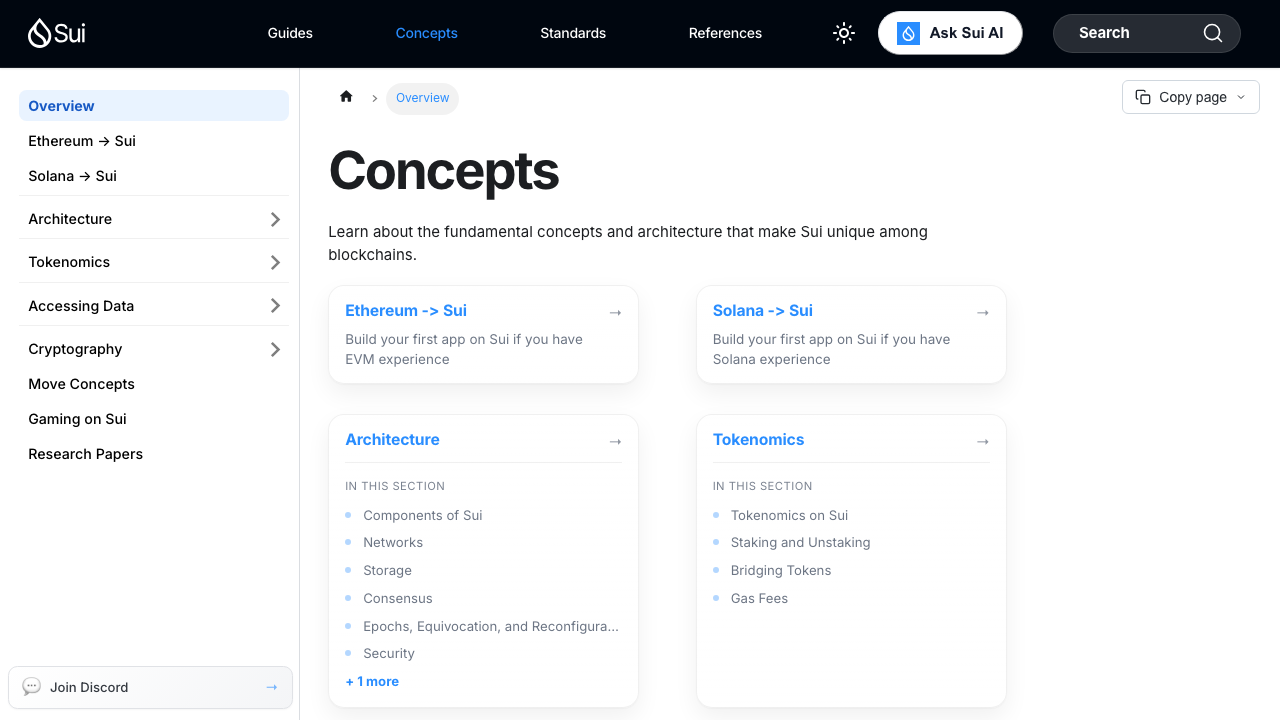
Grounds Sui's high-throughput, low-latency, asset-oriented platform framing.
Grounds validator rewards, staking pools, epochs, and storage-fund economics.
Explains the Move and object-model framing for Sui.
Grounds HyperBFT, staking rewards, validator epochs, and jailing.
Explains the relationship between HyperEVM and HyperCore.
Grounds the builder-deployed perp market discussion.