Market structure comparison
Solana vs Hyperliquid
A builder and infrastructure review of Solana's broad performance L1 versus Hyperliquid's trading-native financial chain.
Solana and Hyperliquid are both performance stories, but not the same story
Solana is a general-purpose high-throughput L1. Hyperliquid is a trading venue that is becoming a chain ecosystem. That difference should shape every technical and market-positioning claim about them.
Solana wants many categories of apps to feel native onchain: wallets, games, payments-like flows, social products, DeFi, mints, mobile UX, and high-frequency trading. Hyperliquid starts from a narrower and sharper product: fast onchain orderbook trading, perps, vaults, builder fees, HyperCore, HyperEVM, and HIP-3 builder-deployed markets.
For infrastructure firms, this is a clean split. Solana creates a broad market for RPC, indexing, wallets, validators, Jito-aware systems, data pipelines, and consumer app infrastructure. Hyperliquid creates a narrower but more intense market around trading interfaces, order books, risk systems, vault analytics, market data, oracles, builder codes, and HyperEVM composition.
Market snapshot (May 28, 2026)
The numbers are variable-backed so the page can refresh market context without rewriting the article.
| Metric | Solana | Hyperliquid | Read |
|---|---|---|---|
| Market cap | $47.8B | $13.3B | Solana is the larger general L1; Hyperliquid is unusually large for a product-led trading chain. |
| Market-cap rank | #7 | #11 | The ranking gap is smaller than the developer-ecosystem gap, which is part of Hyperliquid's story. |
| 3-month market-cap change | +2.59% | +105.10% | Hyperliquid's market momentum has been a product-market-fit signal, not just a generic L1 narrative. |
| 30-day token price change | -1.10% | +51.37% | Short-term token movement should be treated as risk context, not architecture advice. |
| DeFiLlama chain TVL | $5.24B | $1.56B | Solana has broader DeFi depth; Hyperliquid has concentrated trading-native capital. |
Solana is broader by design
Solana's infrastructure market is wide because the chain is not organized around one killer app. Validators, RPC providers, indexers, wallet teams, MEV-aware infrastructure, token tooling, program frameworks, analytics, mobile distribution, payments UX, games, NFTs, and trading apps all sit inside the same performance-driven ecosystem.
That breadth matters for agencies and infrastructure firms. A Solana build might require Rust/SVM program engineering, account-model design, priority-fee handling, token extensions, Jito considerations, low-latency data access, wallet UX, and app-specific indexing. The infrastructure stack is not a thin wrapper around a smart contract.
The downside is that Solana's market can be noisy. Memecoin cycles, consumer hype, validator debates, and RPC bottlenecks can obscure the serious engineering. A good firm has to distinguish useful network leverage from attention.
Hyperliquid is sharper by design
Hyperliquid is not a broad app ecosystem that later discovered trading. It is a trading product that grew chain-like capabilities around itself. HyperCore handles the orderbook and margining center of gravity. HyperEVM gives builders EVM-compatible contracts secured by the same HyperBFT consensus and adjacent to native market state.
That makes Hyperliquid unusually interesting for infrastructure teams. The platform creates demand for trading dashboards, perps UX, HLP and vault analytics, liquidations tooling, oracle design, market-making systems, builder-code monetization, HyperEVM apps, data products, and HIP-3 market operations.
The downside is transparency and decentralization. Hyperliquid's public node repo documents operation, signed binaries, and data outputs, but it is not a full open-source core implementation. Its validator set is also much smaller than Solana's. That may be acceptable for some trading users; it is not a detail a serious review should bury.
Infrastructure surface comparison
This is where the firm-review lens differs from a token comparison.
| Infrastructure category | Solana | Hyperliquid | What firms should prove |
|---|---|---|---|
| Core build skill | Rust, SVM programs, account design, token extensions, wallet and indexing patterns | Trading systems, HyperCore/HyperEVM integrations, perps, margining, APIs, data streams | Do not accept generic web3 claims; ask for stack-specific shipped work. |
| Data and access | RPC, Geyser-style pipelines, indexers, block/transaction streams, wallet telemetry | Orderbook, fills, trades, funding, liquidations, vault state, local info and API data | The data model changes the product. Solana data is app-wide; Hyperliquid data is market-structure-heavy. |
| Validator and network awareness | Stake distribution, leader slots, Jito, scheduler changes, client diversity, geographic concentration | HyperBFT rounds, static epoch validator set, jailing, staking rewards, small validator set | A firm should explain where trust assumptions actually sit. |
| Revenue surface | Apps, priority fees, wallets, infra subscriptions, validator services, trading flow | Builder codes, HIP-3 fees, vault products, trading interfaces, analytics, market-making tooling | Hyperliquid is narrower, but the revenue link is more direct for trading products. |
Public code tells a different diligence story
Solana's public engineering surface is broad. Agave, Jito-Solana, Firedancer, SDKs, program examples, and tooling give reviewers a lot to inspect. The old Solana Labs repo can confuse casual diligence because it is archived, but the active Anza/Agave and Firedancer surfaces are serious infrastructure work.
Hyperliquid's public engineering surface is practical but thinner. The Python SDK, Rust SDK, API docs, node operation docs, data-output schemas, and signed binary verification are useful for builders. They are not the same thing as a fully open core-source review.
That difference should affect buyer diligence. A Solana infrastructure firm can be evaluated by code patterns, deployed programs, validator/RPC operations, and open-source familiarity. A Hyperliquid firm must be evaluated by trading-system competence, API integration quality, risk modeling, and the ability to operate around a more opaque core.
Choose Solana when the product is broader than trading
Solana is the better default when the project needs a large consumer app surface.
- Wallets, games, loyalty products, social apps, mints, consumer DeFi, payment-like flows, and mobile crypto usually fit Solana better.
- Teams that need public developer depth, many ecosystem vendors, and broader founder mindshare get more support on Solana.
- If the product depends on app UX more than exchange-grade market structure, Solana gives the broader canvas.
- The diligence questions are validator economics, client diversity, RPC/indexing reliability, and whether the team has real SVM experience.
Choose Hyperliquid when the product is market structure
Hyperliquid is the better default when the trading engine is the point.
- Perps dashboards, vault analytics, orderbook tooling, funding/liquidation analysis, execution interfaces, and market-making products map naturally to Hyperliquid.
- HyperEVM is interesting because it sits beside HyperCore; an EVM contract can be valuable when it composes with live trading state.
- HIP-3 makes Hyperliquid more platform-like by letting builders deploy perpetual markets, but it also raises oracle, settlement, uptime, and slashing diligence.
- The risk questions are public auditability, validator set size, regulatory exposure, and whether product-market fit has run ahead of decentralization.
The market-positioning read
Solana is a performance network with many app categories. Hyperliquid is a financial venue with chain properties. That one sentence explains why the market can value Hyperliquid so highly despite a much smaller open-source developer footprint.
For a web3 infrastructure firm, the best answer is not 'we build on both.' It is a clear explanation of where the project gets value. If the value is broad consumer interaction, Solana has the better ecosystem shape. If the value is trading-native state, orderbook liquidity, perps, and monetized flow, Hyperliquid is the cleaner specialist environment.
A serious firm can recommend either. A weak firm will pretend the two networks are interchangeable because both are fast.
Solana vs Hyperliquid FAQ
The main confusion is whether Hyperliquid should be compared to general L1s at all.
Is Hyperliquid a Solana competitor?
Only partly. Hyperliquid competes with Solana for some high-performance financial apps, but it is much more trading-native and narrower. Solana is a broader L1 for many app categories.
Is HyperEVM just another EVM chain?
No. HyperEVM matters because it is secured by the same HyperBFT consensus as HyperCore and can sit near native spot and perp orderbook state. The adjacency to the trading venue is the point.
Which chain is better for a trading product?
Hyperliquid is usually better for perps, orderbook, vault, funding, liquidation, and market-making products. Solana is better when the trading feature is one part of a broader consumer crypto app.
What should buyers ask a Hyperliquid agency?
Ask about orderbook data, margining, liquidations, funding rates, API reliability, HyperEVM integration, HIP-3 market operation, and risk controls. Generic EVM experience is not enough.
Sources behind this comparison
The comparison combines dynamic market context with primary technical docs and the existing network research snapshot.
Used for market cap, market rank, 30-day token change, and 90-day market-cap change calculations.
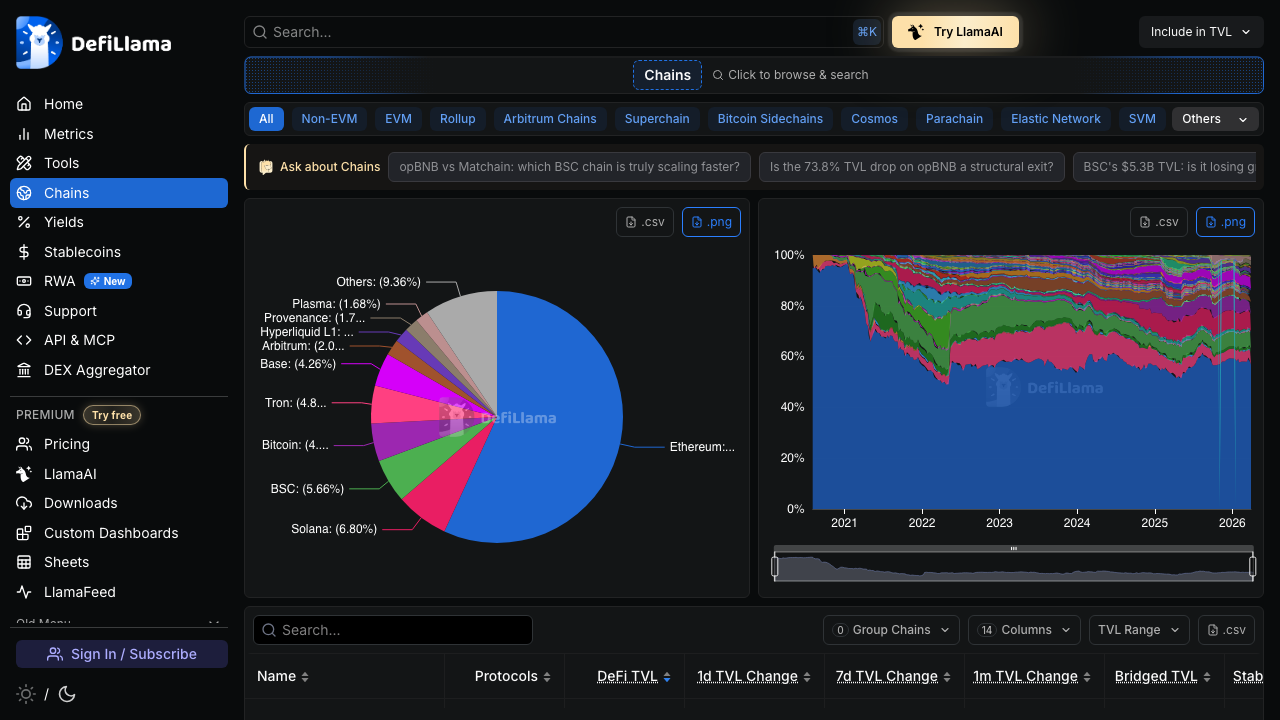
Used for chain-level TVL context.
Grounds the Solana validator and staking discussion.
Useful for client diversity, validator count, uptime, tooling, and developer context.
Grounds HyperBFT rounds, staking rewards, jailing, and validator epochs.
Explains why HyperEVM is tied to HyperCore rather than being just another EVM environment.
Grounds the builder-deployed perp market discussion.
Useful for the broader Solana app-builder surface.