Settlement vs execution
Ethereum vs Hyperliquid
A market-structure review of Ethereum's mature settlement economy versus Hyperliquid's product-led onchain trading stack.
Ethereum and Hyperliquid are almost opposite infrastructure bets
Ethereum is a broad trust and settlement economy. Hyperliquid is a focused trading system that is becoming programmable infrastructure. Comparing them as generic L1s misses the interesting part.
Ethereum's moat is accumulated legitimacy: EVM standards, DeFi liquidity, multiple clients, slashing, auditors, wallets, node providers, MEV infrastructure, rollups, bridges, token standards, and institutional memory. It is not the fastest product surface, but it is the hardest environment to replace when the product needs credibility.
Hyperliquid's moat is product-market fit. Traders use it because the orderbook, perps UX, vault products, builder codes, and token economics are legible. HyperEVM and HIP-3 extend that venue into a broader financial app surface, but the center remains trading.
Market snapshot (May 28, 2026)
The market values are populated from the shared snapshot so the comparison can stay fresh without rewriting the page.
| Metric | Ethereum | Hyperliquid | Read |
|---|---|---|---|
| Market cap | $244.0B | $13.3B | Ethereum is still the much larger reserve-infrastructure network; Hyperliquid is large relative to its narrow product surface. |
| Market-cap rank | #2 | #11 | Ethereum has institutional default status; Hyperliquid has crypto-native trader urgency. |
| 3-month market-cap change | +4.67% | +105.10% | Hyperliquid's momentum is the market pricing a live product, not just another smart-contract platform story. |
| 30-day token price change | -11.70% | +51.37% | Token movement is useful context, but not a proxy for trust assumptions. |
| DeFiLlama chain TVL | $42.2B | $1.56B | Ethereum's capital depth remains in a different league; Hyperliquid's capital is more concentrated around trading. |
Ethereum is where crypto proves trust
Ethereum's public engineering surface is broad enough that it can look chaotic from the outside. Execution clients, consensus clients, validator clients, rollups, EIPs, ERCs, MEV-Boost, account abstraction, bridges, L2 data availability, indexers, wallets, RPC providers, and auditors all sit in the stack.
That sprawl is also the moat. A serious Ethereum project can draw from mature standards, many software clients, a huge Solidity market, battle-tested DeFi patterns, and a long record of postmortems. The ecosystem has already paid for many mistakes with real money.
The infrastructure implication is clear: Ethereum creates service markets everywhere. Wallets, rollups, node providers, security firms, monitoring tools, MEV/searcher infrastructure, bridge operators, indexers, data providers, and protocol engineers all exist because Ethereum is big enough and complicated enough to need them.
Hyperliquid is where crypto proves product-market fit
Hyperliquid's strongest claim is not that it has the broadest developer ecosystem. It does not. The claim is that traders already use the core product. The orderbook and perps venue made the chain matter before a thousand applications had to be imagined around it.
HyperCore is the financial engine. HyperEVM is the programmable extension. HIP-3 is the platform expansion that lets builders deploy perpetual markets while inheriting parts of HyperCore's margining and orderbook infrastructure. That is a very different path from Ethereum's broad neutral settlement thesis.
The infrastructure implication is equally clear: Hyperliquid creates concentrated demand for trading systems. Firms need to understand funding, margin, liquidation, orderbook depth, market deployment, vault risk, builder fees, and data integrity. A generic EVM agency is not automatically useful here.
Trust and execution comparison
This is the buyer diligence table. The two networks ask users to trust different things.
| Dimension | Ethereum | Hyperliquid | Diligence question |
|---|---|---|---|
| Trust model | Large validator/client ecosystem, slashing, social legitimacy, mature public process | HyperBFT with smaller validator set, jailing, staking, and progressively decentralized governance | Is the product value high enough to accept a thinner decentralization surface? |
| Public code surface | Multiple mature open-source client implementations and protocol specs | Practical SDKs and node docs, but opaque signed core binaries for the main node stack | Can the buyer tolerate less public core-source auditability? |
| Execution surface | EVM plus rollups, DeFi, standards, and deep infrastructure markets | HyperCore orderbook/perps plus HyperEVM contracts and HIP-3 market deployment | Is the product general smart-contract infrastructure or trading-native finance? |
| Market moat | Liquidity, standards, institutional comfort, audit market, and developer labor | Execution quality, trader mindshare, orderbook state, fee/value-capture narrative | Is the strongest moat trust depth or product velocity? |
HyperEVM is not a direct Ethereum replacement
HyperEVM is EVM-compatible, but the point is not to recreate Ethereum with a smaller community. The point is to put EVM contracts near HyperCore's native financial state. If a contract can compose with spot and perp orderbook context, then EVM familiarity becomes useful inside a trading venue rather than as a general settlement substitute.
That makes HyperEVM attractive for perps-adjacent applications, structured products, vault tooling, portfolio risk, settlement workflows, and interfaces that benefit from native market state. It is less compelling for products that primarily need broad EVM liquidity, mature stablecoin integrations, institutional custody defaults, or a large audit/vendor market.
In practical terms: HyperEVM can be better than Ethereum for apps that need Hyperliquid. Ethereum remains better for apps that need Ethereum.
Choose Ethereum for broad infrastructure and conservative capital
Ethereum is the lower-regret choice when legitimacy and composability dominate.
- Tokenization, stablecoins, RWAs, institutional DeFi, treasury products, ERC token ecosystems, and audit-heavy products usually start with Ethereum or an Ethereum L2.
- Teams that need many vendors, auditors, wallets, custodians, indexers, and integration partners should value Ethereum's installed base.
- Infrastructure firms selling to the broadest smart-contract market generally find deeper buyer demand in Ethereum's ecosystem.
- Ethereum's main weakness is product friction: L2 selection, bridging, fragmented liquidity, fees, account abstraction, and cross-domain UX.
Choose Hyperliquid for trading-native financial products
Hyperliquid is the better fit when order flow is the product surface.
- Perps, orderbook interfaces, vault analytics, funding-rate products, liquidation monitoring, market-making tools, and trader dashboards map naturally to Hyperliquid.
- HIP-3 creates a builder market for deploying perpetuals, but it also raises serious oracle, specification, uptime, slashing, and settlement diligence.
- Hyperliquid's product velocity is real, but buyers should understand the small validator set, opaque core software, and derivatives/regulatory risk profile.
- The best Hyperliquid firms should sound like trading-infrastructure teams, not generic smart-contract shops.
The market-positioning read
Ethereum's biggest advantage is that every serious crypto institution already has a mental model for it. The network can be expensive and fragmented while still being the default answer for high-value settlement.
Hyperliquid's biggest advantage is that its core product already has a reason to exist. Many chains have to persuade developers to build imagined demand. Hyperliquid starts with trader demand and then asks what else can be built around it.
The comparison should stay honest: Ethereum is the stronger trust and ecosystem platform; Hyperliquid is the stronger specialized trading product. A builder should only pick Hyperliquid over Ethereum when the trading-native surface is not incidental but central.
Ethereum vs Hyperliquid FAQ
The hard questions are about trust, not just performance.
Is Hyperliquid more scalable than Ethereum?
For its core trading use case, Hyperliquid feels more purpose-built and performant. That does not make it a broader replacement for Ethereum's settlement, standards, liquidity, and infrastructure ecosystem.
Is HyperEVM safer than Ethereum?
No broad claim like that is defensible. HyperEVM may be useful near HyperCore market state, but Ethereum has the stronger public client, validator, audit, and institutional trust surface.
When should a firm recommend Hyperliquid instead of Ethereum?
Recommend Hyperliquid when the product is fundamentally about perps, orderbooks, vaults, trader UX, market data, builder-deployed markets, or HyperCore composition. Recommend Ethereum when the project needs broad trust and EVM ecosystem depth.
What is the biggest Hyperliquid diligence risk?
The biggest technical diligence issue is the gap between strong product-market fit and thinner public core-code, validator, and decentralization evidence compared with Ethereum.
Sources behind this comparison
The page separates dated market data from protocol and infrastructure claims.
Used for market cap, market rank, 30-day token change, and 90-day market-cap change calculations.
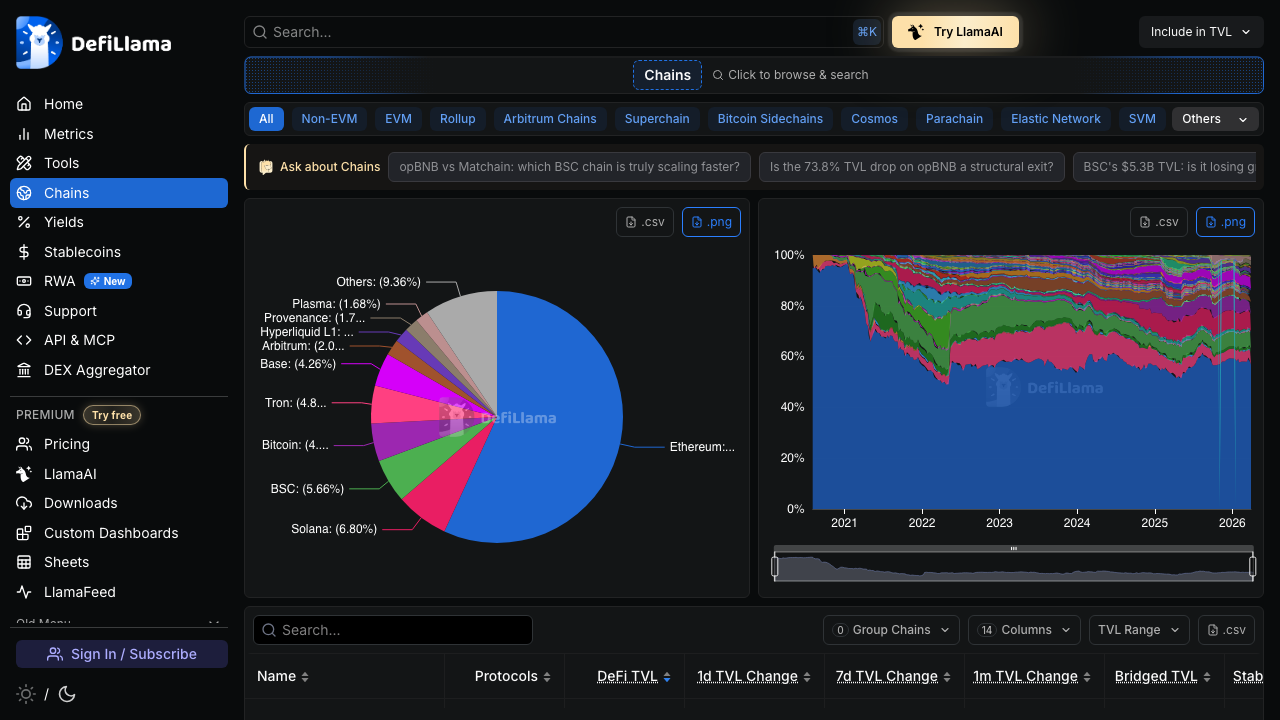
Used for chain-level TVL context.
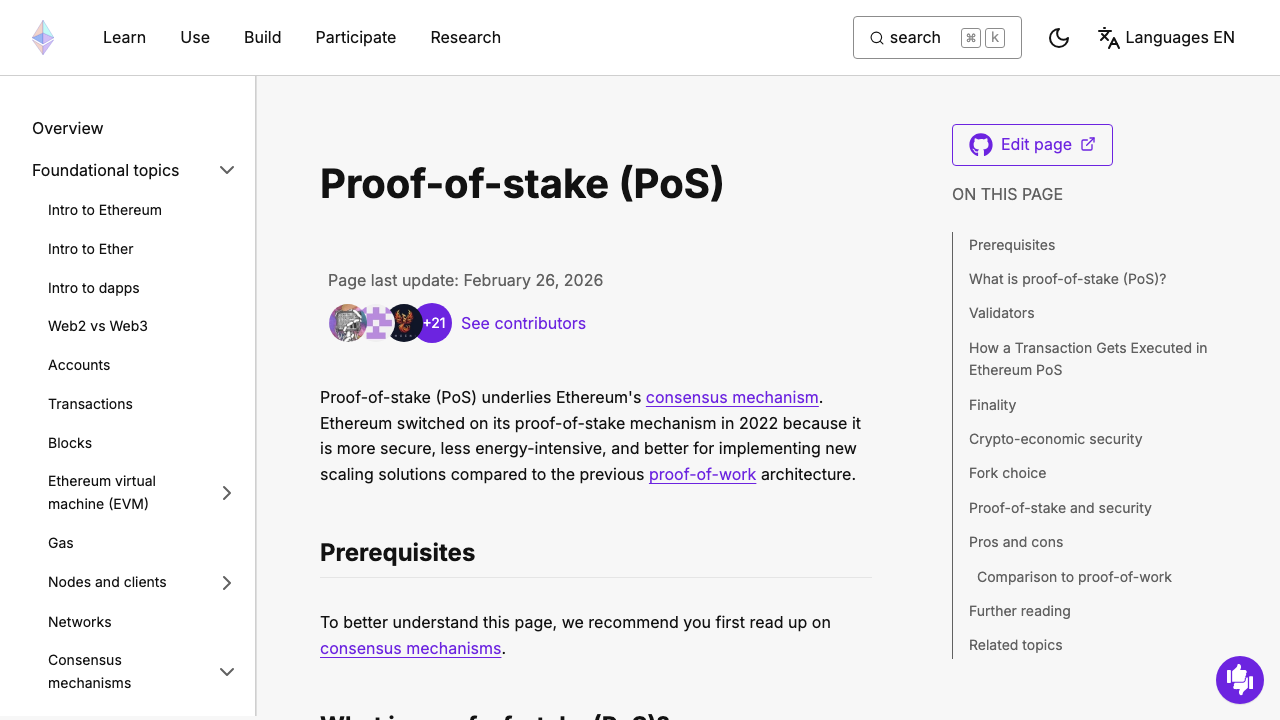
Grounds Ethereum validator, slashing, attestation, and finality claims.

Supports the Ethereum-as-settlement-plus-rollups framing.
Grounds HyperBFT, staking rewards, validator epochs, and jailing.
Explains HyperEVM's relationship to HyperCore.
Grounds the builder-deployed market and slashing discussion.