Chain selection brief
Ethereum vs Solana: which network is best to build on?
A builder-focused 2026 guide to choosing between Ethereum and Solana for smart contracts, DeFi, NFTs, gaming, payments, L1 vs L2 strategy, developer tooling, and operational tradeoffs.
Ethereum vs Solana: which network should a serious team build on?
The honest answer is that there is no universal winner because the two ecosystems optimize for different product realities. Ethereum is still the default when you need the deepest liquidity, the broadest institutional comfort, the largest EVM tooling base, and a security model tied to a mature settlement layer plus an expanding rollup stack. Solana is the stronger choice when the product lives or dies on low fees, low latency, smoother consumer UX, and a single high-throughput execution environment.
That is why the shallow debate gets the topic wrong. The question is not whether Ethereum is 'more serious' or whether Solana is 'faster.' The real question is what kind of application you are building, what kind of users you expect, and what kind of operational constraints you can tolerate.
Current chain data makes this split visible. DeFiLlama's live chain data still shows Ethereum far ahead in total value locked at roughly $108B versus Solana near $13.5B, while current DEX volume snapshots can show Solana ahead on short-horizon trading activity, with recent 24-hour volumes around $1.29B on Solana versus roughly $765M on Ethereum. In other words: Ethereum still dominates capital depth, while Solana keeps making the strongest case for speed-heavy activity.
For builders, that translates into a set of very concrete search-intent questions: Ethereum vs Solana for smart contracts, Ethereum vs Solana for DeFi, Ethereum vs Solana for NFTs, ERC-20 vs SPL tokens, EVM vs SVM, Solidity vs Rust, and Ethereum L2s vs one fast L1. Those are the terms that actually map to architecture decisions.
Current network reality (2026)
These are the tradeoffs that matter more than slogans.
| Dimension | Ethereum | Solana | Why builders care |
|---|---|---|---|
| Capital depth | Still the deepest liquidity and TVL environment in crypto | Much smaller than Ethereum, but more active than many chains on consumer trading flow | Liquidity shape affects launch strategy, treasury movement, and where serious financial apps feel native |
| Execution and UX | Base layer is expensive; user experience often depends on L2 choice and bridge design | Low-fee, low-latency UX on one primary execution environment | This changes whether a product feels institutional and composable or fast and consumer-native |
| Developer environment | Largest EVM mindshare, broad language and framework support, huge vendor ecosystem | Stronger Rust/SVM identity, tighter ecosystem, faster path for performance-oriented teams | Hiring, tooling, and time-to-shipping all change with the developer base |
| Security and decentralization | Stronger institutional trust and a mature settlement narrative, especially with rollups anchored to Ethereum | Improving fast, but still more debated on validator concentration and operational centralization | This matters more for high-value financial systems than for casual consumer products |
| Product archetype fit | Institutional DeFi, tokenization, infra, serious onchain finance, interoperable EVM stacks | Consumer apps, onchain trading, payments-like UX, games, and high-frequency interaction | The right chain depends on whether the product is capital-heavy or interaction-heavy |
Ethereum vs Solana for smart contract development: EVM vs SVM
Ethereum development still means the largest smart contract labor market in crypto. Teams working in the Ethereum ecosystem usually choose Solidity tooling, EVM-compatible infrastructure, broad wallet support, established audit vendors, and familiar token standards such as ERC-20, ERC-721, and ERC-1155. That stack is one reason Ethereum remains the safer default for DeFi, tokenization, DAO infrastructure, and enterprise-facing web3 work.
Solana development is a different design philosophy. The builder story is usually Rust plus Solana programs, Anchor-based workflows, account-model design, SPL tokens, and aggressive performance tuning around execution speed and fees. That can feel more demanding at first, but it also creates a path to a faster end-user product for trading apps, payment-like flows, games, social products, and other interaction-heavy dapps.
This is why EVM vs SVM is not a side debate. It changes language choice, hiring strategy, program architecture, audit approach, wallet flows, and the kinds of composability you inherit by default.
ERC-20, SPL tokens, NFTs, and the L1/L2 design choice
These are the builder-specific details that usually decide the chain before ideology ever does.
| Build question | Ethereum answer | Solana answer | Why it matters |
|---|---|---|---|
| Smart contract model | EVM smart contracts, usually Solidity, with the deepest third-party tooling market | Solana programs, usually Rust, with stronger performance orientation | This affects hiring, tooling, audits, and how fast a team can safely ship production code |
| Token standards | ERC-20 for fungible tokens, ERC-721 and ERC-1155 for NFTs and game assets | SPL tokens and Solana-native token tooling | Founders need to know what wallet support, exchange support, and developer ergonomics look like on day one |
| Scaling strategy | Ethereum is increasingly an L1 settlement layer plus L2 and rollup ecosystem | Solana tries to keep more of the experience on one high-throughput L1 | This changes fragmentation, bridge design, and how much chain-selection friction users feel |
| Liquidity and DeFi gravity | Still the default capital center for serious DeFi and institutional onchain finance | Smaller locked capital base, but stronger current momentum in high-velocity trading activity | Capital depth changes launch assumptions, treasury movement, and what kind of financial product feels native |
| Consumer UX | Often requires careful L2 selection, wallet support, and fee management to feel smooth | More naturally aligned with fast swaps, cheap actions, and mobile-like consumer flows | If the app is consumer-first, UX friction can matter more than abstract chain prestige |
Why Ethereum is still the safer default for many serious builders
Ethereum still wins the depth argument. The ecosystem remains the reference layer for DeFi liquidity, institutional comfort, and the broader EVM tooling economy. Ethereum's developer documentation is still the deepest general-purpose documentation stack in the space, and the chain's roadmap keeps leaning into the model that has already reshaped its economics: use Ethereum as the settlement and security anchor while rollups and related scaling layers handle more day-to-day throughput.
That matters because Ethereum's answer to speed is not 'be Solana.' It is to let L2s scale around a trusted base layer. The Fusaka upgrade and Ethereum's scaling documentation keep reinforcing that long-term direction. For teams building financial infrastructure, tokenization rails, or products that want to inherit Ethereum's trust and composability assumptions, this remains a very strong design center.
Ethereum L1 plus L2s vs Solana's fast L1 is the real architecture split
A lot of builders say 'Ethereum' when what they really mean is the Ethereum security model plus a practical deployment path on rollups or other L2 infrastructure. That is an important distinction. Ethereum often wins not because mainnet alone is the perfect place for every user interaction, but because the broader EVM universe lets teams choose where to settle, where to execute, and how much fee pressure or composability they are willing to trade off.
Solana makes the opposite promise: do less chain orchestration, bridge less, and keep the user closer to one primary execution environment. That simplicity is one reason Solana can outperform Ethereum on consumer feel. It is also why Ethereum teams need a clearer L1 vs L2 thesis at the start of the build.
Why Solana is the stronger choice for many consumer products
Solana's best argument is not theoretical throughput. It is product feel. The network health report from the Solana Foundation makes the case directly: recent periods of heavy traffic pushed record activity without network-wide downtime, and the chain is being optimized around replay speed, validator economics, scheduler improvements, and future consensus and networking upgrades.
That translates into something ordinary users actually notice. Wallet flows, swaps, mints, and app interactions can feel more like product software and less like infrastructure ceremony. If you are building something that looks more like a trading app, a social product, a game, or a fast-moving consumer network than a high-value institutional settlement system, Solana has a real advantage.
Ethereum vs Solana for DeFi, NFTs, gaming, payments, and web3 apps
Ethereum is still the more natural home for products that depend on serious DeFi composability, ERC-20 liquidity, governance infrastructure, and cross-protocol financial legibility. That includes tokenized assets, treasury products, lending markets, infrastructure tooling, institutional settlement rails, and enterprise-facing smart contract systems.
Solana has the cleaner case for products where the onchain interaction is the product experience. Payments-like flows, high-frequency trading venues, NFT-heavy consumer loops, game economies, and fast social dapps benefit from Solana's cost and latency profile more directly than from Ethereum's capital depth. Builders should be honest about whether the product is capital-heavy, interaction-heavy, or both.
Choose by product category, not by tribal identity
This is where the build decision usually becomes obvious.
| Product category | Better default | Reason |
|---|---|---|
| Institutional DeFi, tokenization, and RWA-heavy products | Ethereum | Deeper liquidity, stronger enterprise trust, and a more natural fit with the broader EVM and rollup world. |
| Consumer trading app or high-frequency onchain product | Solana | Lower-latency user experience and fewer fee-driven product compromises. |
| Game, social, or mobile-native onchain experience | Solana | The interaction cost and responsiveness are better aligned with consumer expectations. |
| Infra or tooling business that benefits from EVM compatibility | Ethereum | Access to the widest range of existing protocols, tooling, and EVM-adjacent buyers. |
| Team wants one chain and minimal UX fragmentation | Solana | A more unified primary execution environment can reduce bridge and chain-selection complexity. |
The tooling and hiring tradeoff is real
Ethereum still has the easier default hiring market. The EVM ecosystem remains larger, the documentation is broader, and the number of vendors, libraries, frameworks, and auditors who already understand the stack is still hard to match. If your team wants maximum optionality on talent and infrastructure providers, Ethereum keeps the edge.
Solana's counterweight is momentum and specificity. Recent developer-report coverage keeps highlighting that Solana has been strong in new-developer growth, even while Ethereum still dominates total developer depth. For a team that wants to build a fast product in a performance-oriented environment and is comfortable with Rust and Solana-native tooling, that trade can be worth it.
The decentralization and trust question cannot be hand-waved
For high-value systems, this is still where Ethereum has the easier institutional story. Ethereum's security narrative is more mature, its rollup ecosystem inherits trust from that base layer, and its broad community and client ecosystem make it easier to defend to conservative stakeholders.
Solana's own official reporting is stronger than many critics admit. The chain highlights a Nakamoto coefficient of 20 in its June 2025 network report, sustained uptime, improved validator economics, and more client diversity through Frankendancer and future roadmap work. That is real progress. But it is still progress in a category where Ethereum begins with more default trust.
When Ethereum is the better build decision
Choose Ethereum first when these conditions dominate.
- The product depends on deep liquidity, mature DeFi composability, or institutional capital flows.
- You want broad EVM tooling, vendor support, and easier access to experienced smart-contract talent.
- Security posture and credibility with conservative partners matter more than the cleanest consumer UX.
- You are comfortable using Ethereum plus L2s rather than insisting on one monolithic execution environment.
When Solana is the better build decision
Choose Solana first when the product is interaction-heavy and performance-sensitive.
- The app needs low-friction, low-fee interactions to feel normal to users.
- Latency, transaction throughput, and product smoothness matter more than maximum institutional comfort.
- You want a more unified execution environment and fewer UX compromises around chain selection and bridging.
- The product looks more like a trading venue, social product, payment-like flow, or game than a conservative financial settlement layer.
Frequently asked questions
These are the practical questions builders usually mean when they search Ethereum vs Solana.
Is Ethereum or Solana better for developers in 2026?
Ethereum is still the better default for teams that want deep EVM tooling, broad composability, and institutional trust. Solana is the better default for teams building consumer products that need fast, low-fee interactions and a more unified user experience.
Is Ethereum or Solana better for smart contract development?
Ethereum is usually the safer default for smart contract teams that want EVM tooling, Solidity talent, ERC-20 familiarity, and deep DeFi composability. Solana is often the better choice when the smart contract system needs high-throughput execution, cheaper user actions, and a consumer-first product feel.
What is the difference between ERC-20 and SPL tokens?
ERC-20 is the dominant fungible-token standard in the Ethereum and broader EVM ecosystem. SPL tokens are the common fungible-token model in Solana. The difference is not just token syntax. It reflects deeper differences in wallet support, tooling, program design, exchange integration, and the ecosystems where those assets feel native.
How does Ethereum L2 vs Solana change the decision?
Ethereum often becomes attractive through its L2 and rollup ecosystem, where teams can inherit Ethereum's trust model while improving speed and fees. Solana makes a different promise: keep more of the product inside one fast L1. So the decision is often not Ethereum mainnet vs Solana, but Ethereum's modular scaling path vs Solana's integrated execution path.
Should a startup build on Solana or Ethereum first?
It depends on the product. Build on Solana first if interaction speed and user experience are central to adoption. Build on Ethereum first if the product depends on liquidity depth, compatibility with the broader EVM world, or a stronger enterprise trust narrative.
Is Solana faster than Ethereum for real users?
Yes, in the direct user-experience sense. Ethereum often relies on L2s to achieve the kind of speed and fee profile that Solana offers more natively.
Is Ethereum or Solana better for NFTs, gaming, or consumer dapps?
Solana usually has the stronger default case for NFTs, gaming, consumer trading products, and other apps where cheap and frequent interactions are central. Ethereum can still win when the project needs higher-end liquidity, enterprise trust, or deep EVM composability, but the product experience often requires more design work around fees and execution environment.
Does Ethereum still matter if Solana feels better to use?
Absolutely. Ethereum still anchors a huge share of crypto capital, DeFi infrastructure, rollup settlement, and institutional trust. The user-experience gap does not erase the capital and infrastructure advantages.
Bottom line
Build on Ethereum when trust, liquidity depth, EVM tooling, and institutional seriousness matter most.
Build on Solana when the product is only good if it feels fast, cheap, and easy to use at consumer scale.
The right answer is not ideological. It is architectural. Pick the network whose strengths match the kind of product you are actually shipping.
Visual source gallery
These are the current sources behind this page as of 2026. The goal is to combine official network material with live ecosystem data, not to recycle the same 'security vs speed' argument without evidence.
Best official source on uptime, validator economics, throughput milestones, and where Solana thinks its performance story is now.
Useful because it shows how Solana is increasingly framing itself to serious financial builders, not just retail speculation.

Useful for the builder argument: Ethereum still offers the broadest open documentation stack for app, tooling, and protocol development.

Useful because it grounds the Ethereum side of the debate in actual smart-contract and EVM development, not just token price narratives.

Important because it shows Ethereum's scaling direction more clearly than generic commentary does: the roadmap keeps pushing toward better data availability and L2 scale.
Useful for the SVM side of the story: builder reality on Solana starts with programs, accounts, and execution design.
Helpful because it anchors the SPL-token discussion in actual implementation detail rather than abstract ecosystem branding.
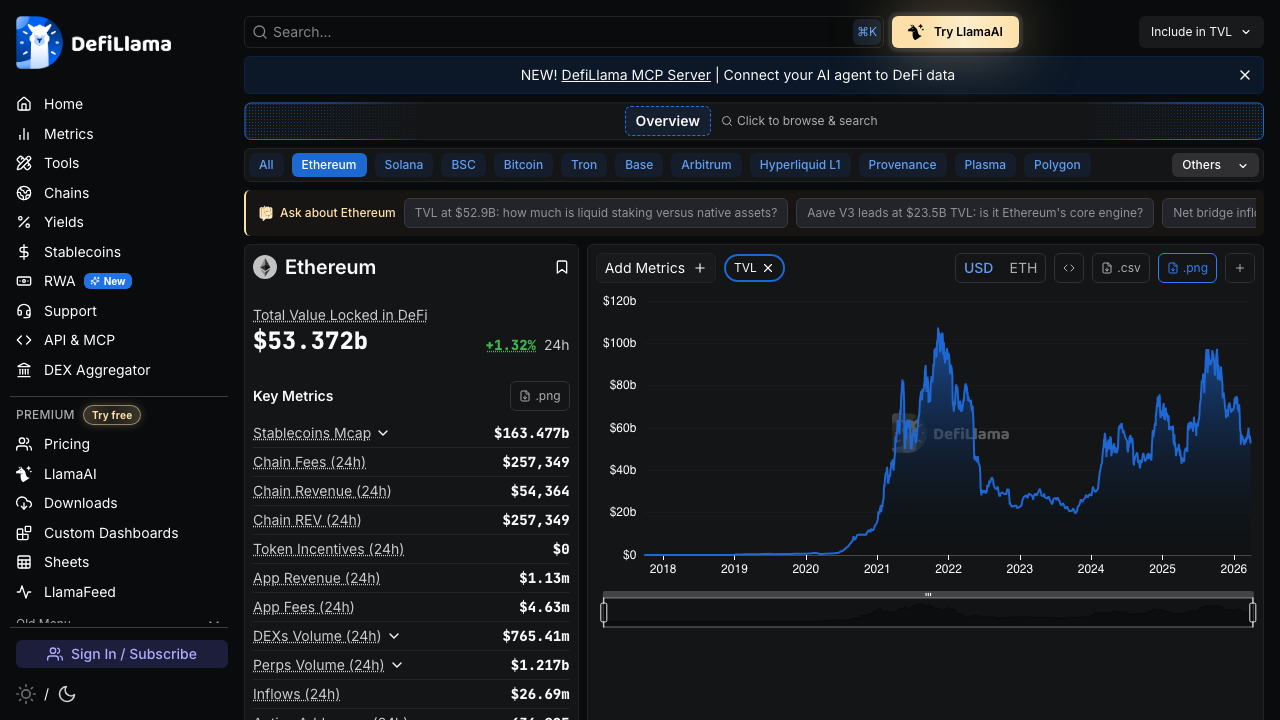
Current chain data still shows Ethereum's capital depth clearly in TVL terms.
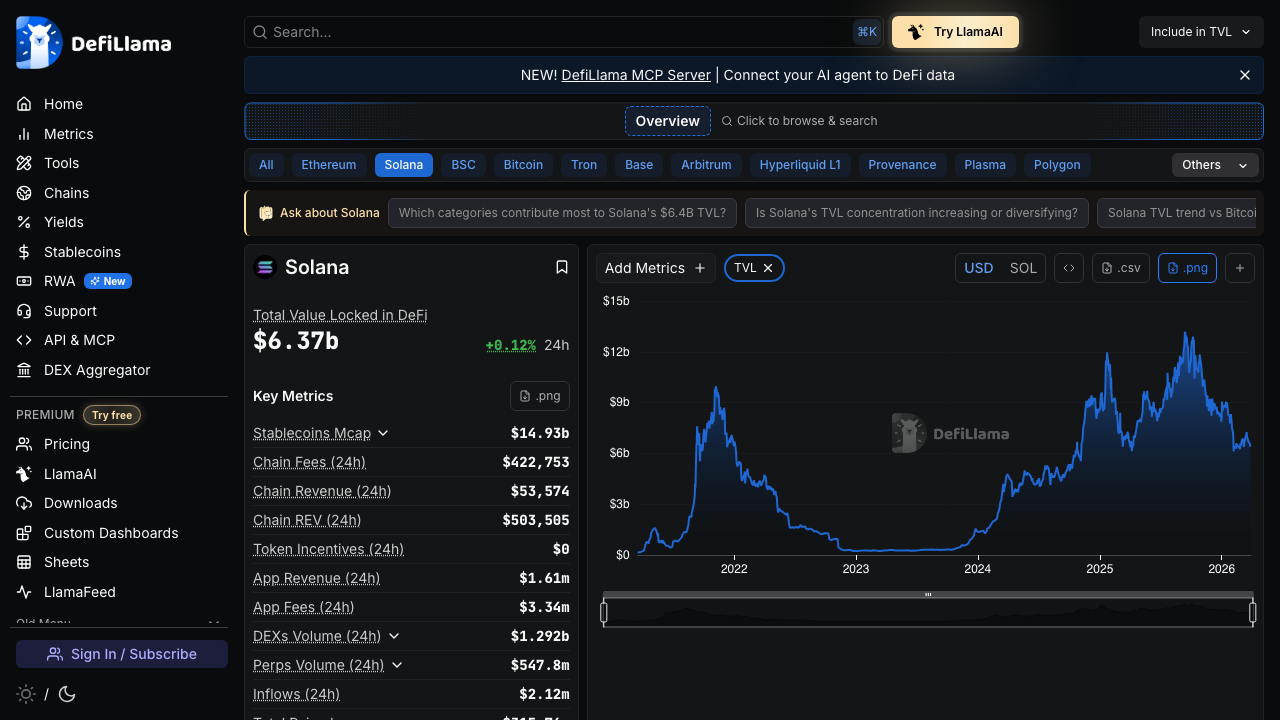
Current chain data helps show where Solana is smaller on locked capital but stronger on certain activity surfaces.
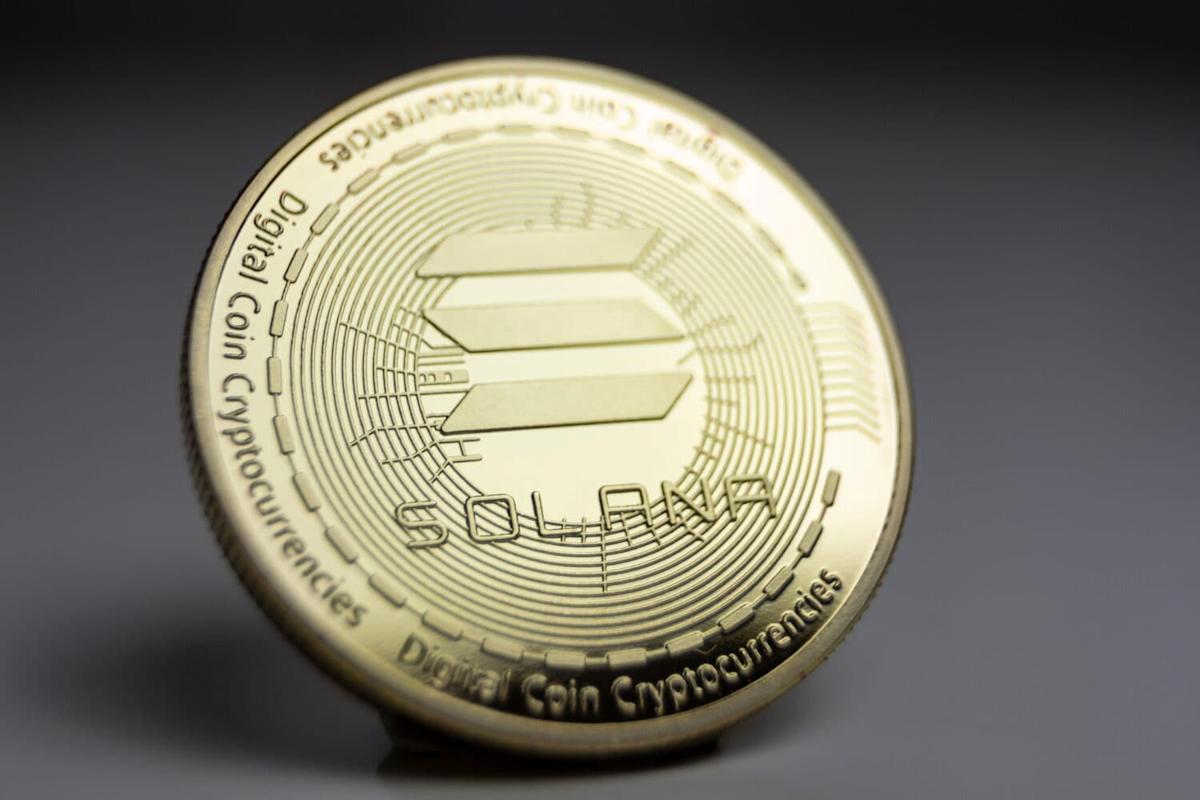
Useful summary of recent developer-report coverage: Solana keeps winning on growth, while Ethereum still leads on absolute developer depth.
Useful for understanding why Ethereum still has the easier institutional-security narrative.